
About SPHERE
SPHERE - Space Schools Exploration and Research Mission
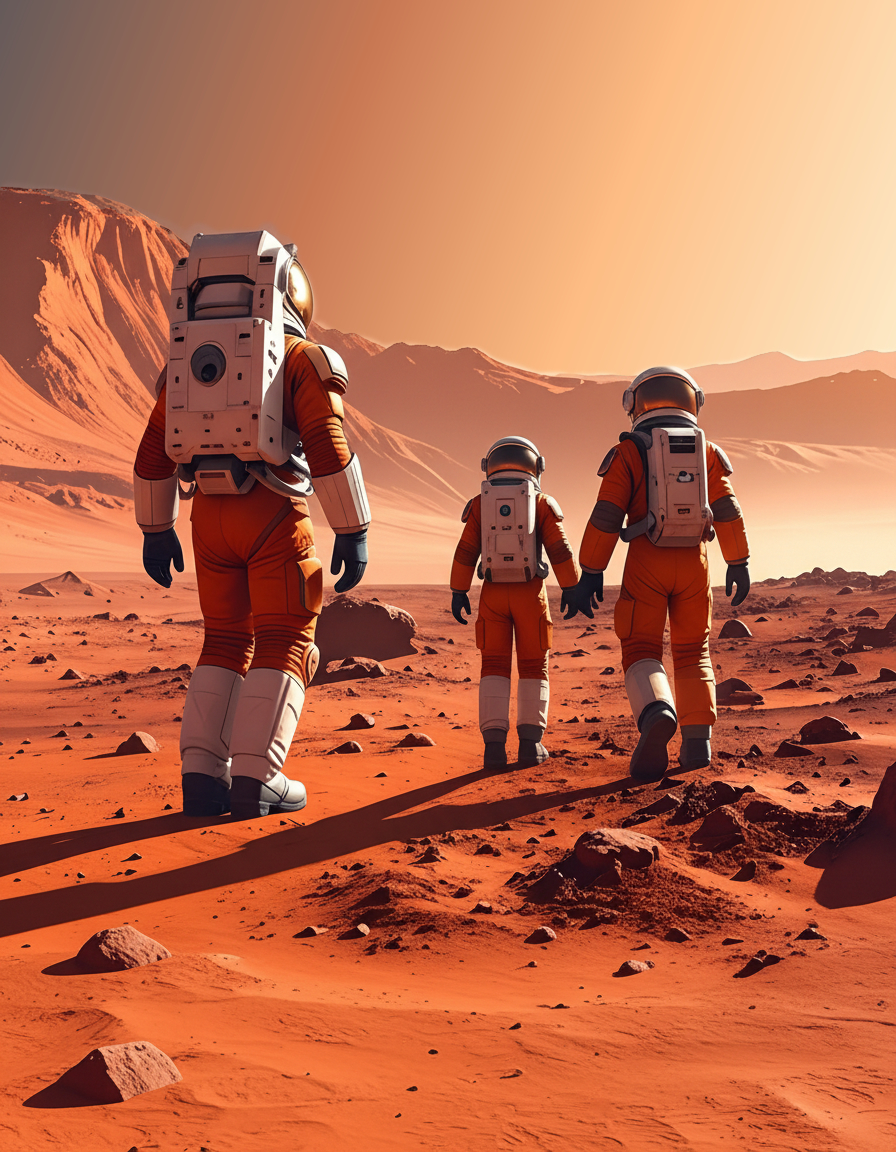
SPHERE offers an innovative interdisciplinary and inclusive approach to education, equipping students with state-of-the-art tools and engaging them in contemporary research opportunities. Students will explore curriculum content while embarking on an analog space mission. For a few weeks, they will mimic the challenges of astronauts in foreign worlds in their schools, supported by AI-assisted content, enhancing their learning experience. They will collaborate with schools and researchers across borders in a genuine research journey.
SPHERE will invite students to work alongside their counterparts in other countries and jointly embark on international research, designing their own missions and analysing real data from AMEDEE missions, thereby transforming them from passive learners into active contributors to international research.
To support educators throughout this process, SPHERE provides tutorials and practical guidelines for creating simulations and facilitating student participation in analog space missions. A dedicated online learning journey offers professional development for teachers, and all resources will be freely available in open-access format. The result will be a growing community of educators empowered to bring these opportunities to their peers — and a generation of students prepared and confident to pursue future careers in space exploration and STEM-related fields.
This project is a follow-up to EXPLORE, which focused on creating an analog settlement for students. SPHERE takes this a step further by actively integrating the methodologies and workflows of professional analog missions into student learning experiences.
SPHERE Fact Box
What?
SPHERE, or Space Schools Exploration and Research Mission, is an EU-funded Erasmus+ project that will enable students to mimic the challenges of astronauts in foreign worlds in their own schools, and some students will be able to take part in an analog space mission in Portugal and Poland. SPHERE offers a digitally rich and inclusive approach to facilitating learning with a European dimension.
Why?
SPHERE brings a holistic and transdisciplinary approach to learning in schools, providing professional development opportunities to teachers, fostering close collaboration with local communities, and empowering learners to choose career pathways in STEAM fields. Space exploration is a powerful tool for STEAM education, enabling the involvement of schools and their communities in projects that target real-world challenges, such as sustainability and climate actions. Besides technical skills, students will be invited to solve problems, be creative, collaborate and communicate with colleagues at a national and international level. All these skills will be essential for their career and are directly connected to the EU goal of equipping students and educators with the necessary digital skills for the future.
Who?
Austrian Space Forum is coordinating the project, leading the partnership of COSPAR, NUCLIO, Ellinogermaniki Agogi, BioSky, the Technical University of Munich and Space is More.
For whom?
Initially for students from five countries, Austria, Germany, Greece, Portugal and Poland, and teachers, but schools in other countries are welcome to join the SPHERE adventure! SPHERE intends to enable 1800 students to simulate an analog mission.
How?
The SPHERE toolkit, including freely accessible online materials, and associated professional development for teachers will be the backbone of the project. Professional development for teachers will be provided online, and through summer schools, along with an AI-companion to help them integrate all the necessary components (curriculum, competencies, assessment, etc.) and an innovative assessment of the student's journey will be used to help teachers improve their students’ learning experience within SPHERE. A physical toolkit will also be available for selected schools.
Through collaboration with AMADEE analog astronauts and mission planners, students will be introduced to the processes of planetary exploration, field science, and space mission planning. Students will analyse real mission data, simulate astronaut tasks, and develop solutions for space-related challenges, replicating the structure of AMADEE missions. This exposure will not only enhance their digital literacy, problem-solving abilities, and teamwork skills but also inspire them to pursue careers in space science and engineering.
Duration?
36 months, starting September 2025.
Where?
Initially students in high schools in Austria, Germany, Greece, Poland and Portugal will be invited to simulate an analog site, these activities are the SPHERE out-of-classroom simulations (SOCs). Schools in other countries are free to organise their own SOCs. Two SPHERE analog missions (SAMs) will also be undertaken in a real scenario with selected students, one in the Mars Analog Research Station at the Lake Alqueva Observatory (Portugal), and the other at Lunares Research Station in Piła, Poland.